


Who you target, where you invest, and what message you convey: many marketing decisions rely on your buyer persona. If that customer profile becomes outdated, you are inadvertently operating on assumptions. By regularly testing your persona against real-world behaviour, you can quickly identify where your target audience, channels, or messaging need adjustment. This isn't about discarding your persona, but keeping it relevant.
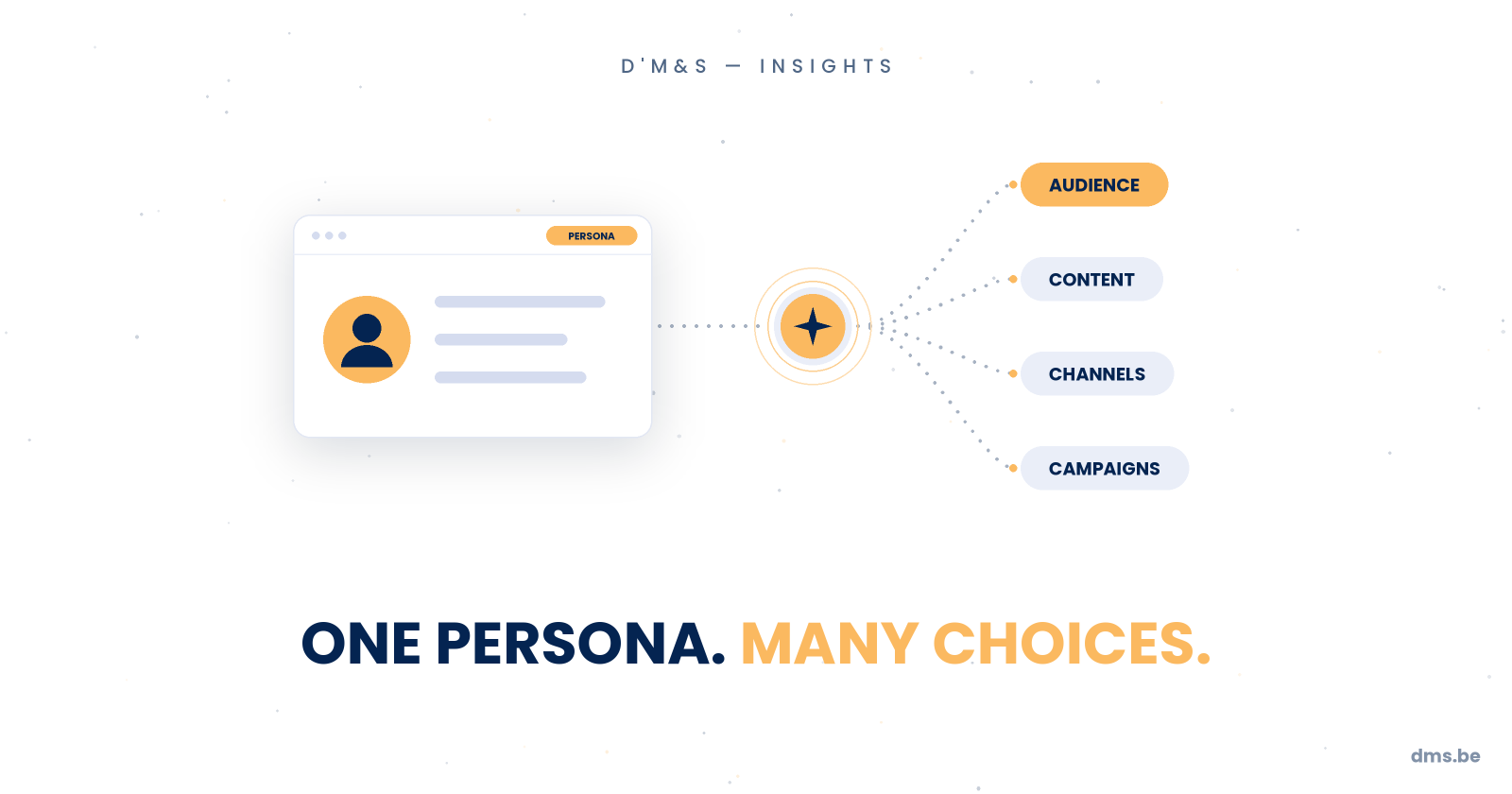
A buyer persona helps marketing and communications teams keep the same customer in mind. It provides direction for target audience selection, content, channels, and campaigns. Especially when such a persona is informed by interviews, research, and internal organisational knowledge.
However, a workshop primarily consolidates what you currently know—or think you know—about the customer. While that picture can be highly valuable, it remains a model. Meanwhile, the real customer continues to evolve: new questions arise, other players attract attention, and roles within the purchasing process shift.
Effective buyer persona research doesn't stop once the persona is on paper. That is exactly when the question that makes the difference for your marketing begins: do you see that customer profile reflected in what people actually search for, say, and do?
You don't need to constantly rewrite your persona for this. Think of it as a working document: stable enough to provide direction, yet flexible enough to adapt as your customer's behaviour changes.
An outdated assumption is rarely spectacularly wrong. Often, the difference lies in a detail that directly impacts your decisions:
This is precisely where a reality check can deliver a return. If you have a better understanding of who makes the decisions, where the search begins, and which arguments carry weight, you can more effectively determine who you target, where your budget goes, and which message you prioritise.
This doesn't mean that experience or intuition become worthless. On the contrary. They remain important, but you balance them against current customer behaviour. This allows you to see which assumptions still hold true and where you should shift your focus.
This connection is vital because marketing decisions rarely stand alone. A different decision-maker may require a different message; a different search pattern may change your channel mix; different keywords can sharpen your content. In this way, customer behaviour becomes not just a report alongside your media plan, but input for the decisions that determine where your time and budget are spent.
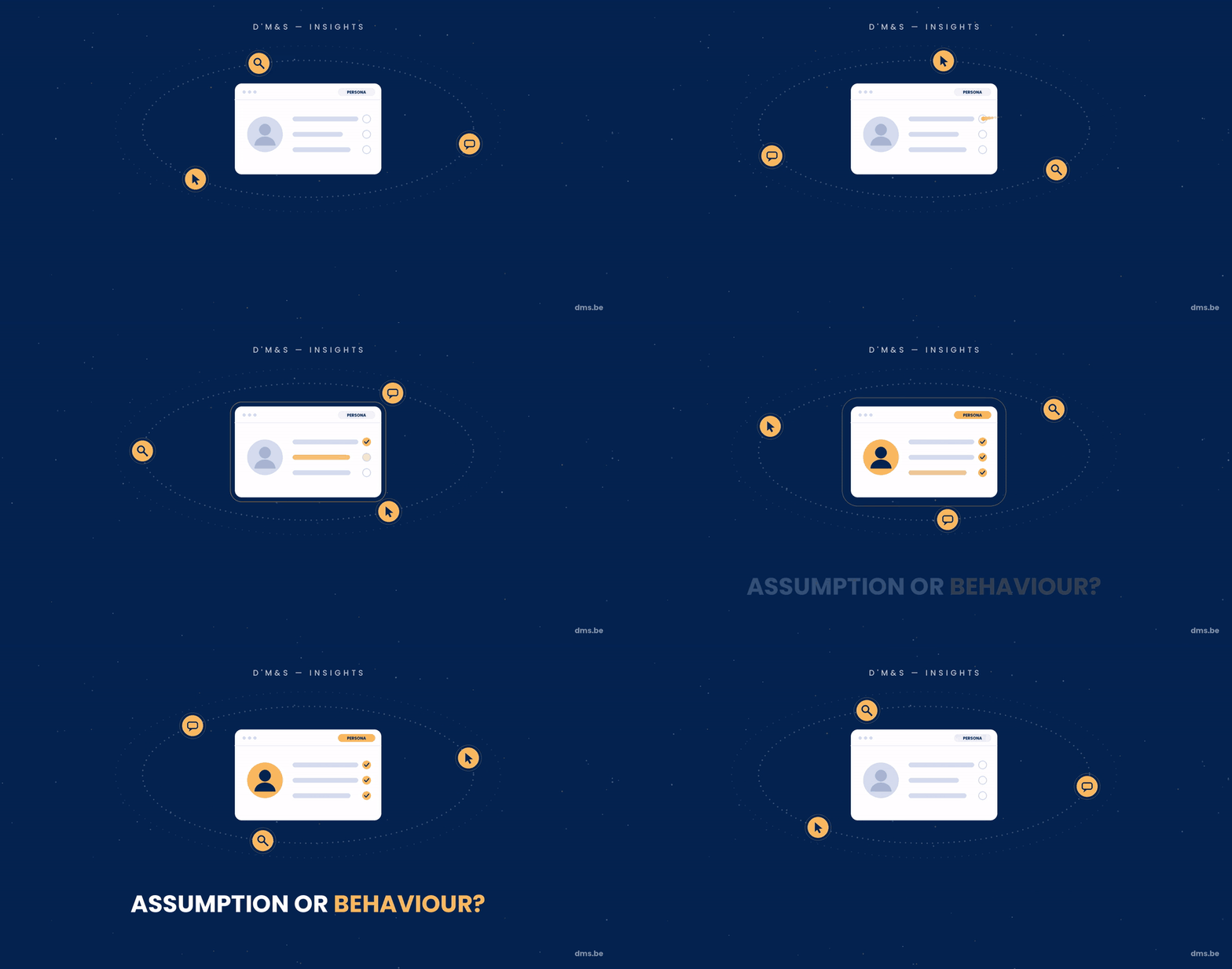
Some persona characteristics rarely change. Others move much faster: search behaviour, channel usage, language, and the role of different people in the decision-making process.
Take search behaviour. New questions arise as technology, prices, regulations, or expectations change. The words people use to search often reveal exactly what is on their minds at that moment—and sometimes these differ from the terminology used internally within your organisation.
The same applies to channels and customer journeys. Customers rarely follow the path neatly drawn out in a workshop. They jump between search engines, websites, social channels, reviews, and colleagues. On your website, you can then see where they click through, what information they are looking for, and where they drop off.
You don't need to wait for one perfect data source to do this. Search behaviour reveals questions and intentions. Online conversations show which words and themes are trending. Website behaviour shows what people actually do when they interact with your brand.
Focus primarily on patterns. A single search term or click path won't change your persona. But when multiple signals point in the same direction, you gain a much stronger foundation for your marketing decisions.
You also don't need to wait until a major mismatch becomes visible. Small shifts can have an impact over time: a new question that keeps coming up, a channel gaining importance, or a page where visitors frequently drop off. By spotting these signals early, you can adjust your approach before outdated assumptions weigh too heavily on your campaign or budget decisions.
That doesn't make a persona wrong. It makes it temporary.
At STG Badkamers, the marketing focus was traditionally heavily geared towards the professional. However, the analysis showed that the decisive role in the purchasing process was increasingly shifting to the private individual.
On paper: the professional. In reality: increasingly the private consumer.
That difference has an immediate impact on your marketing. Who do you address first? Which arguments carry more weight? What information does someone need to move forward with a decision? And where do you allocate your budget?
If you don't spot such a shift, you can still create a strong campaign—but for the wrong person. If you do see it, you can tailor your target audience, message, and channel selection more effectively to those who truly influence the decision today.
The lesson isn't that the previous customer profile was wrong. It's that roles and decision-making processes evolve. Even a well-founded persona must therefore be able to adapt to what is happening in the market.
For STG, the gain was not in a completely new customer model, but in a sharper picture of who is actually driving the decision today. It is precisely that kind of nuance that can determine whether your marketing merely confirms what you were already doing, or gives you the room to shift your message, content, and budget more intelligently.
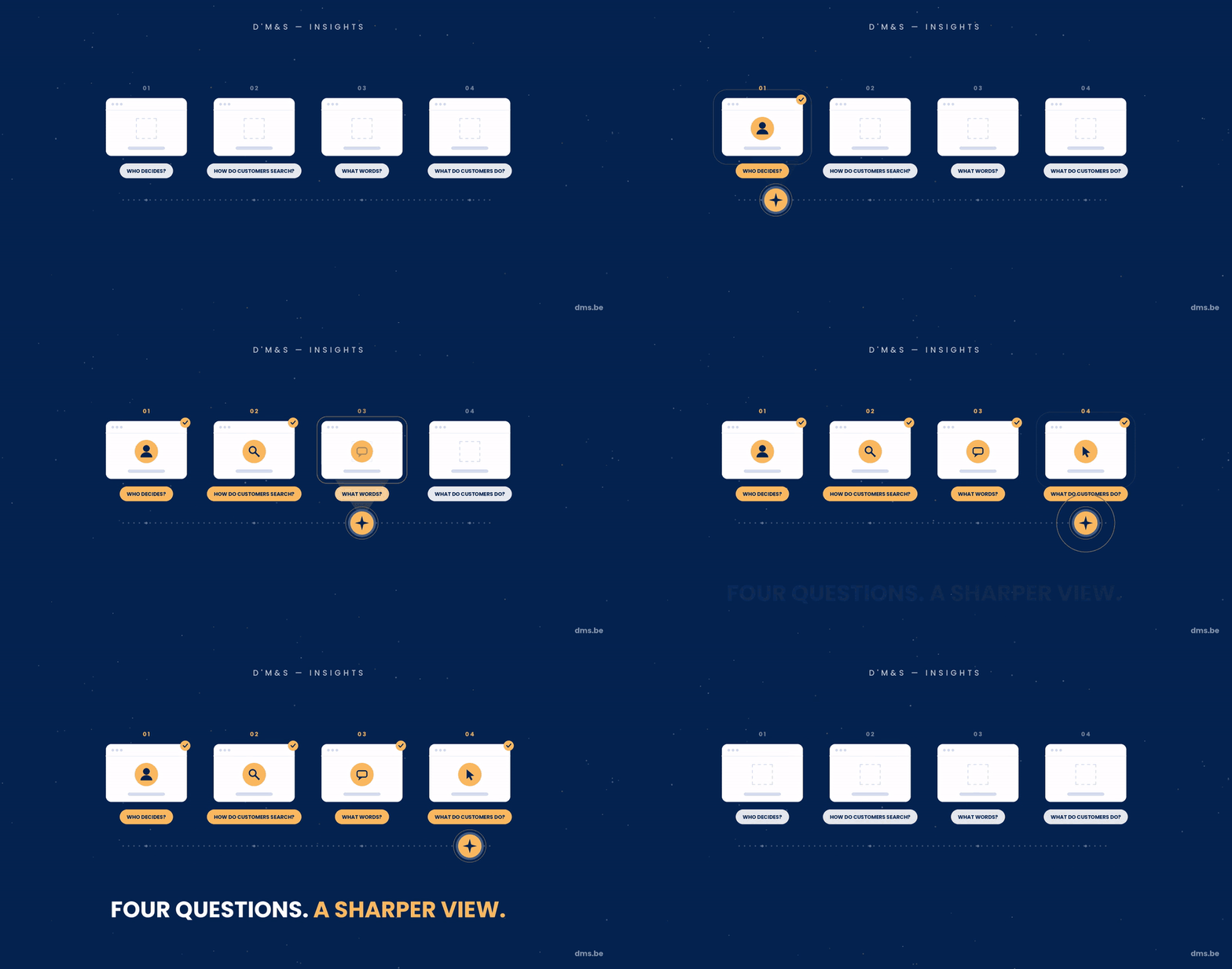
Want to know if your current persona still provides enough guidance? Compare your customer profile against these four questions:
1. Who is really making the decision?
Look beyond the person who uses your product or has direct contact with your organization. Who influences the choice? Who compares options? Who gives the final green light? The answer determines who your communication and campaigns should prioritize reaching.
2. How does your customer search?
What questions do they type into Google? What terms do they use to describe their needs or problems? Which topics are gaining importance? This helps you determine where the search begins and which content or channels best align with it.
3. What words does your customer use themselves?
Does your communication speak the same language as your customer? Look at how people formulate their questions, doubts, and expectations. This shows you where your message resonates and where it sounds too technical, too general, or simply off-key.
4. What does your customer do?
Where do they enter your website? Where do they click through? Where do they drop off? And which channels do they use along the way? That behavior helps you assess whether the customer journey on paper matches the route people actually take.
Next, compare the answers with your persona. Where do you see confirmation? Where is evidence missing? Where do the signals contradict your existing image? Start with the assumptions that have the greatest impact on your choices: who you address, what message you convey, and where you invest.
The goal is not to rebuild your persona with every deviation, but to see more quickly where a small adjustment can make your marketing more relevant, targeted, and better substantiated.
A good buyer persona remains valuable, as long as you don't treat it as a final version.
D’M&S Insights brings together search, online, and website behavior and compares it with the customer profile you currently use. This allows you to see where your assumptions are confirmed, where behavior is shifting, and where you can make more targeted choices regarding your target audience, message, channels, or budget.
Do you want to rely less on assumptions and substantiate your marketing choices more strongly? Schedule an exploratory call about D’M&S Insights.