

Humans are not alone… on the internet.
According to recent reports, today chatbots and AI agents account for more than half of all online traffic. ChatGPT, Claude, Gemini, and Perplexity crawl websites 24/7 to generate answers, while a growing army of AI agents uses publicly available web data to autonomously take action and perform tasks.
Is this the big bang for internet marketing? In any case, it is a new step in the AI evolution that helps (forces?) us humans to approach digital marketing differently.
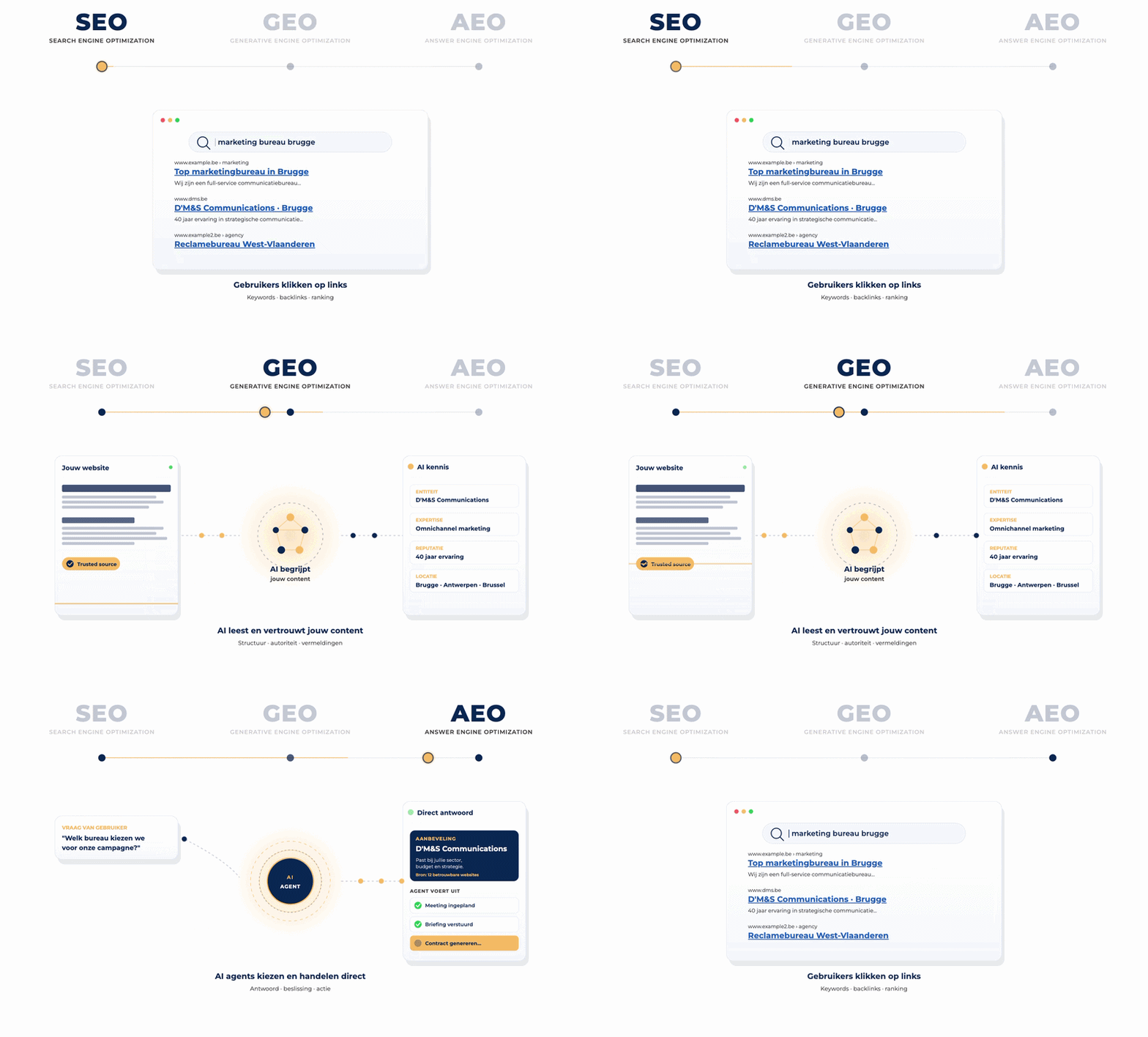
We already touched on this in a previous edition of Pulse. For years, digital visibility was all about SEO: being found in search engines. But AI bots and agents work differently. Smarter. They don't want a list of links. No keywords. They want an answer to questions that people are asking.
Enter GEO to ensure your website is picked up as a source for LLMs (Large Language Models). With the breakthrough of AI agents, a new search tactic has emerged: AEO or Answer Engine Optimization (some also refer to it as Agent Engine Optimization).
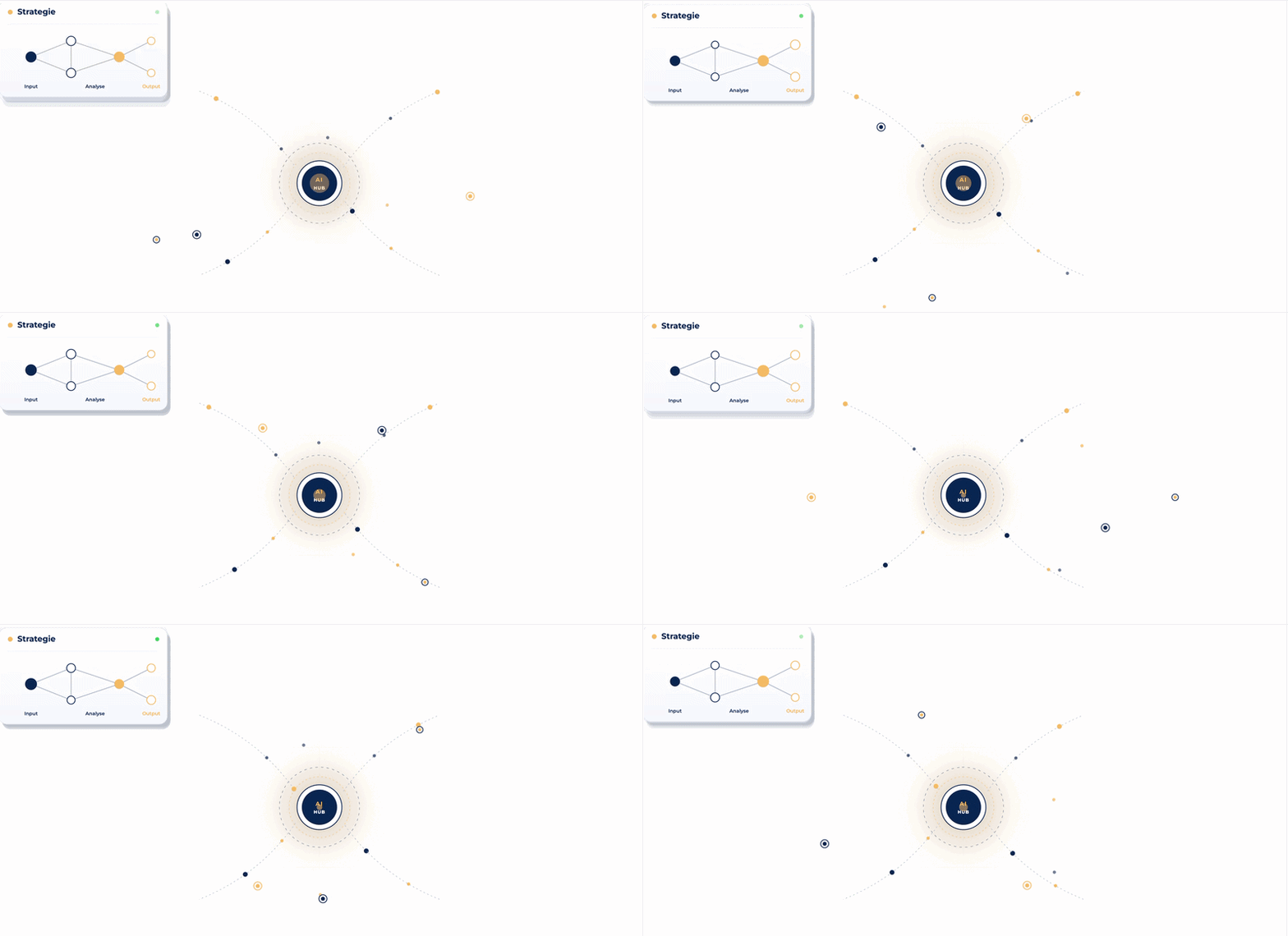
Your content must not only be visible to Google, but also understandable, reliable, and usable for AI systems. Especially for the growing number of AI agents.
This means, among other things, that you technically and substantively will need to take a close look at your website if you want AI agents to drive traffic to it.
Note:
You need strong expertise pages, consistent content structures, clear metadata, relevant FAQs, and concrete answers to questions people in your industry are asking, as well as a clear positioning and, last but not least, a brand that comes across as credible.
Because if ten companies offer roughly the same thing, how does an AI agent or chatbot decide who gets priority in its answer? Exactly. Just like people do: based on trust and relevance.
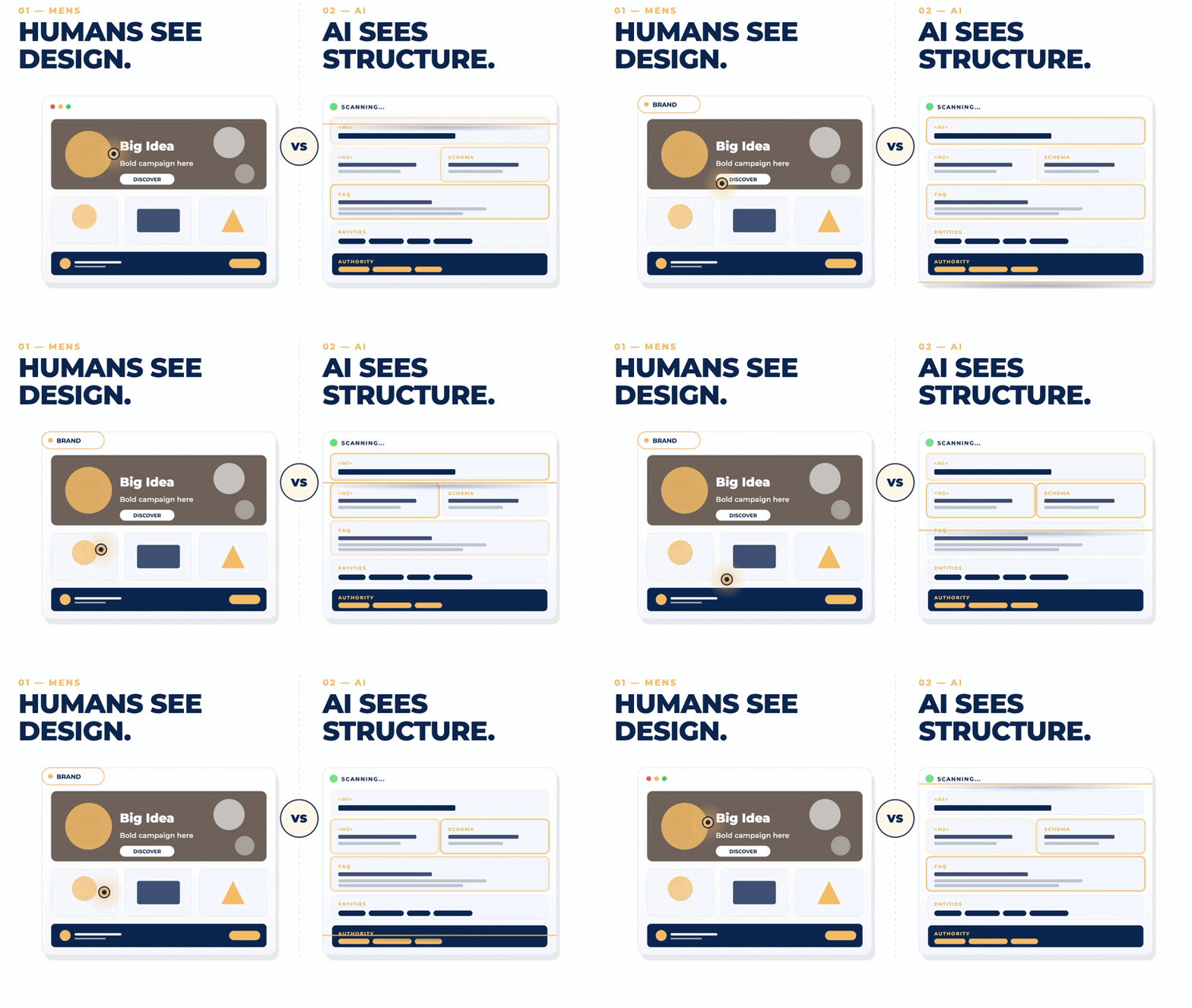
It is useful to know that AI agents view websites differently than we do. They don't scan a homepage to be impressed by a visual or a tagline. They look for structure, context, and clarity.
So yes, design and creativity remain important. But at the same time, it is becoming crucial that your content is logically structured and substantively strong enough to be used as a reliable source.
Many companies today still focus too one-sidedly on clicks and rankings. While the real challenge is gradually shifting toward interpretability. Can an AI system see and understand at a glance who you are, what you offer, how you differ, and why you are relevant?
And this is where it gets really interesting. Because just as AI agents are increasingly taking over our operational tasks, creativity and brand identity are becoming more important than ever.
Canva, Adobe, and Google are rapidly building AI agents into their platforms. Convenient? Absolutely. But if everyone is using the same tools, there is a risk of the same output. An AI agent can perfectly write an ad. Structure a campaign. Generate a visual.
What it cannot do is define your identity or add a layer of authenticity to your brand story. That remains human work. Work for marketers.
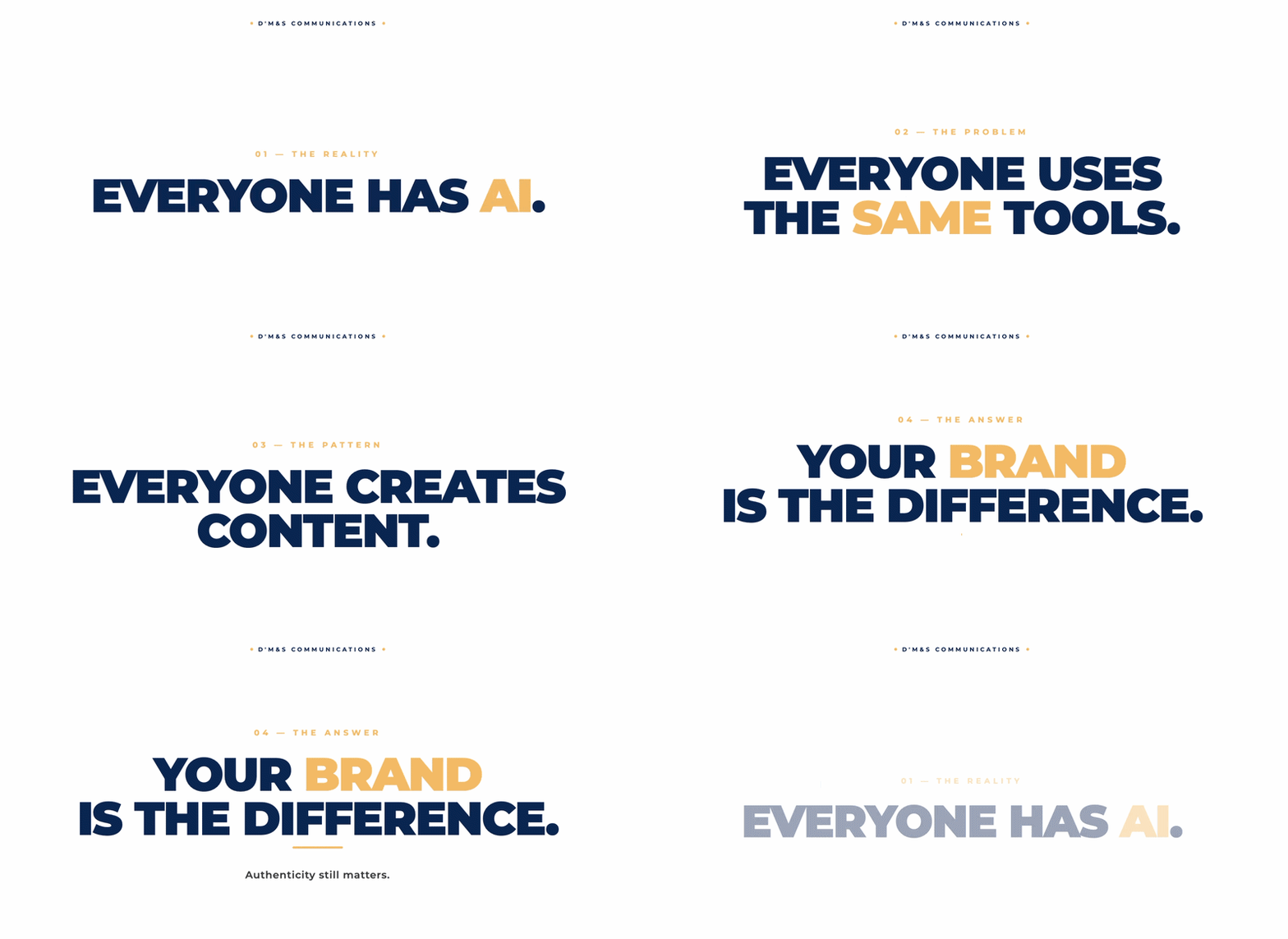
The role of marketing is shifting as a result. Less purely operational. More strategic. The marketer of tomorrow will be someone who intelligently makes AI collaborate with brand strategy, content, data, and creativity. Someone who orchestrates processes instead of executing everything manually. So don't ask yourself: “How do we produce more content?” Instead, ask: “How do we stand out and ensure that people and AI agents recognize, understand, and trust our brand?”
Was this insight useful?
Or would you like to know how AI-ready your brand, content, and digital visibility really are today? At D’M&S, we would be happy to help you explore how to make your brand future-proof for the internet of tomorrow.