

You browse to a website. You click around, read an article, view a page, come back a day later… and suddenly it feels like that website recognizes you. The content feels more relevant. You see a different call-to-action. The order of the blocks has subtly changed. And that is no coincidence.
We are used to it from platforms like Netflix or Spotify: they flawlessly sense what we want. Not based on who we are, but on what we do. That same logic is now coming to websites. No more fixed blocks or a one-size-fits-all homepage, but a digital experience that adapts to your behavior in real time.
What happens behind the scenes doesn't have to be complex at all. A website registers which pages you view, how long you linger, which channel you arrive from, and what you click on. That data provides an indication of your interests. Smart tools automatically analyze and translate this behavioral data into personalized content. The result? Every visitor sees a different order of blocks, a different call-to-action, a different article. Tailored to the individual, in other words.
For example, someone who has shown interest in sustainability will see relevant cases, blogs, or a specific call-to-action on their next visit. Did a visitor not fully complete a quote request? The next time they visit, a shorter version is ready, with an extra nudge to go ahead and fill out and send the quote. Action, analysis, insight, reaction!
The beauty of behavior-driven personalization is that it no longer requires heavy custom web development. Thanks to tools like HubSpot, Adobe Target, or even Google Optimize, it is more accessible than ever. AI plays an increasingly large role in this: it helps select content, set up scenarios, and make recommendations. Moreover, the tools are becoming ever more intelligent and user-friendly. You don't need a massive budget to get started. With a well-thought-out setup and clear flows, you can achieve results quickly.
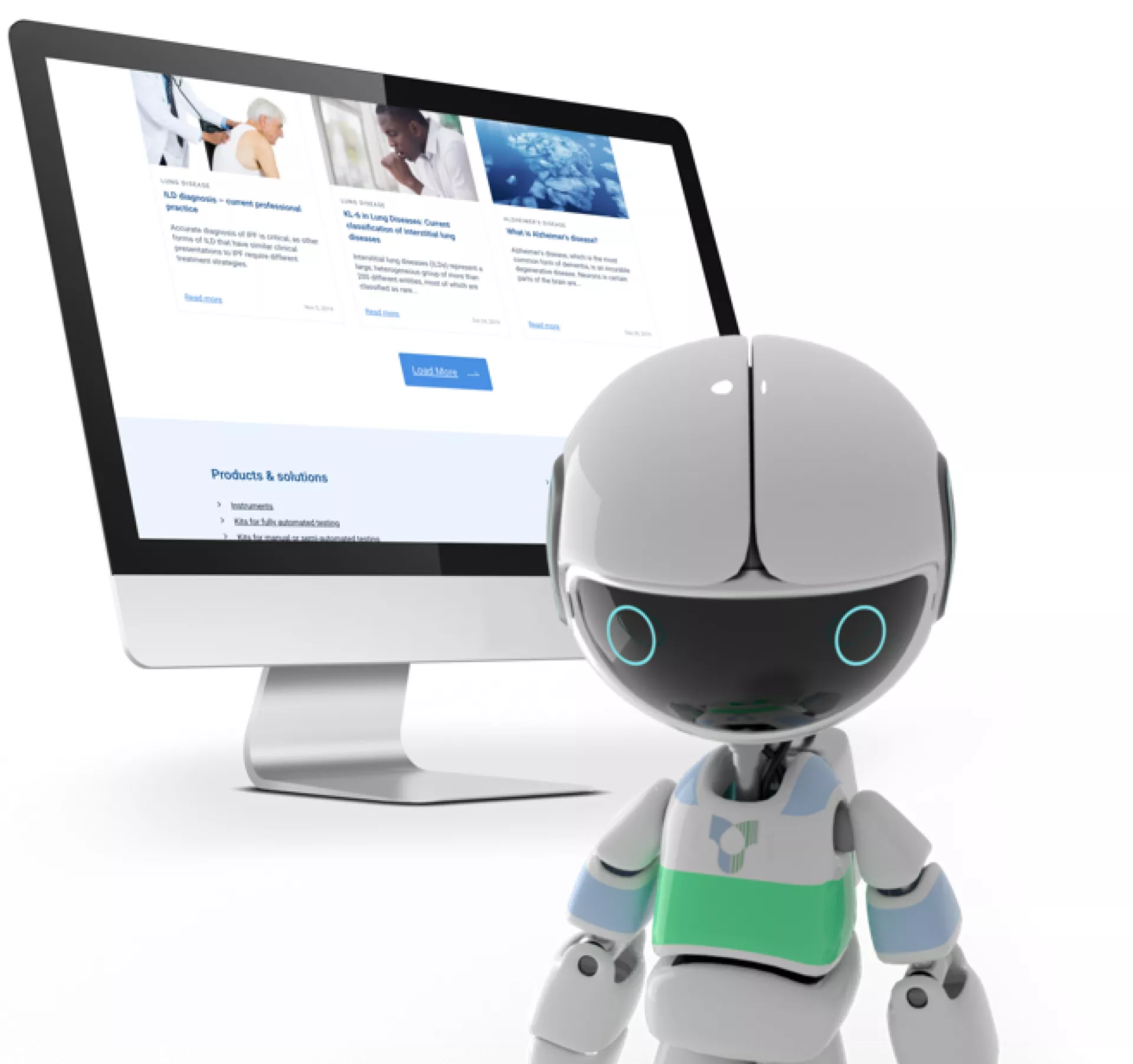
At D’M&S, we have been supporting biotech player Fujirebio for some time now with the optimization of their online performance. The new, future-proof website now offers an intuitive user experience and a strong content structure, and is equipped with a solid foundation for further personalization. Thanks to a smart CMS and a modular design, we can capture visitor behavior and use it for personalized content flows. In this way, Fujirebio is building a digital experience that evolves with the interests and needs of its target audience. A great example of how a smart structure can make a world of difference and open the door to hyper-personalization.
Because personalized content feels logical. Because no one wants generic messages that have nothing to do with their needs anymore. And because brands that adapt build more trust.
Personalization increases engagement, reduces visitor frustration, and leads to more valuable conversions. Not by shouting louder, but by showing the right content at the right time to the right person. You could see it as the digital version of a good conversation: you listen, you understand, and you respond to what the other person is saying or how they are behaving.
Is personalized content only for large companies with equally large budgets? Certainly not. Offering your website visitors a personalized experience can be done with just a few simple interventions. A different banner for people who come to your site via a newsletter. A specific recommendation for someone who has just viewed a product. A customized call-to-action based on previous behavior. It doesn't all have to become hyper-personalized at once. Start testing, learn, and refine until you have the right tone.
But you can count on the fact that the future of websites is dynamic, not static. Websites are becoming just like their visitors: curious, flexible, and constantly in motion.
Anyone who still thinks that everyone wants the same homepage is way off the mark...